

This post starts a series. The idea is simple: we run live elections through Mantle, our population simulation engine, publish the number before the votes are counted, and then let reality grade us in public. On 3 November we find out.
We are starting with the Texas Senate race, because in this cycle, Texas is going to be a bulwark for the rest of the country.
The race
Texas has not elected a Democrat statewide since 1994. That is the longest such streak in the country, and it is the fact that makes everything below strange.
The seat belonged to John Cornyn, who had held it for twenty-four years. He does not appear on the November ballot. He lost it in a primary runoff on 26 May, and he lost it badly — 63.8 per cent to 36.2 — a week after President Trump endorsed his challenger.
That challenger is the sitting Attorney General. Against him, Democrats have put up a 37-year-old state representative who is, at the time of writing, still enrolled in seminary.
Silver Bulletin’s model makes Texas the single most likely race to decide control of the Senate — a 13 per cent chance of being the tipping point, higher than any other state.
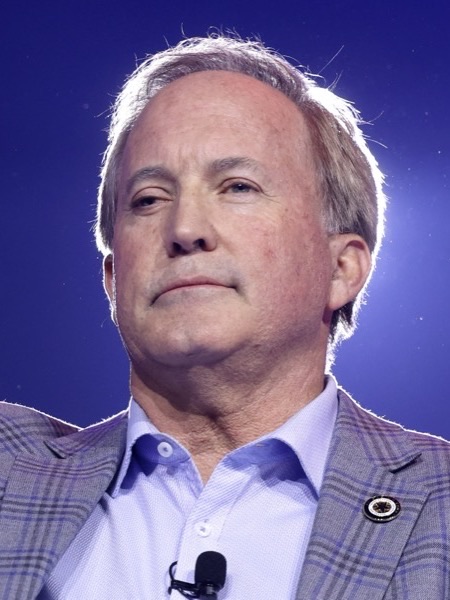



Ken Paxton (R)
Paxton has been Attorney General of Texas since 2015. The eleven years since have produced a legal and personal record with few modern parallels for someone still holding statewide office.
The securities case. He was indicted on state securities fraud charges in 2015, relating to conduct before he took office. The case ran for most of a decade. In March 2024 prosecutors agreed to drop the felony charges in exchange for $271,000 in restitution, 100 hours of community service and 15 hours of legal ethics training; the charges were formally dismissed once he had completed it.
The whistleblowers. In 2020, four senior lawyers inside his own office — Blake Brickman, Mark Penley, David Maxwell and Ryan Vassar — reported him to the FBI. They were fired. They sued under the Texas Whistleblower Act, and in April 2025 Travis County District Judge Catherine Mauzy found they had proven their case and awarded them $6.6 million. Paxton called the ruling “ridiculous” and said he would appeal; in July 2025 he dropped the appeal, and the state paid.
The impeachment. His request for $3.3 million in state funds to settle with those whistleblowers prompted the Texas House to impeach him in May 2023, by 121 votes to 23 — with more than 70 per cent of House Republicans voting for it — and suspend him from office. Four months later the Texas Senate acquitted him on all sixteen articles, including bribery, abuse of office and obstruction, and he returned to work.
The federal case that wasn’t. In the final days of the Biden administration the Justice Department declined to prosecute, ending the federal corruption investigation — the most serious legal threat he faced.
The divorce. In July 2025, State Senator Angela Paxton filed to end their thirty-nine-year marriage, citing adultery on biblical grounds and seeking a disproportionate share of the marital estate. A trial was scheduled for 24 June 2026 — which would have put his conduct and finances before a Collin County court in the middle of a Senate campaign — and was cancelled three weeks beforehand at both parties’ request.
And Trump. On 19 May 2026, a week before the runoff, Trump endorsed him over Cornyn, calling him “a true MAGA Warrior” and noting that Cornyn “was not supportive of me when times were tough.” Paxton won by twenty-seven points. It is difficult to overstate how completely that endorsement defines this candidacy: he is on the ballot because of it.
Every one of those facts is public record, and roughly half of them cut in his favour. He was acquitted. The charges were dismissed. No federal case followed. Texas Republicans nominated him anyway, by a landslide, knowing all of it.
James Talarico (D)
Talarico was born in Round Rock in 1989. He read government at UT Austin, taught sixth-grade language arts at Rhodes Middle School on the west side of San Antonio, took a master’s in education policy at Harvard, and won a seat in the Texas House in 2018, which he has held for three terms.
His legislative record is unglamorous and specific: the first statutory cap on pre-K class sizes in Texas, Narcan in schools, childcare affordability, prescription drug costs, and a route for incarcerated minors to finish a high school diploma.
He is also, currently, a student at Austin Presbyterian Theological Seminary — a detail that would be a footnote in most races and is not one here, given that the divorce filing against his opponent was made on biblical grounds.
The models like him. Not everyone does: Grant Davis Reeher, a political scientist at Syracuse, allows that “Talarico is a very high quality candidate” but still expects “that Paxton will win a very close election” — on the theory that enough Republicans and independents come home in the end. That is the bear case, and it is not a stupid one in a state that has not elected a Democrat statewide in thirty-two years.
The environment
Three things are happening underneath this race, and all of them are moving in the same direction.
Petrol. The Texas statewide average is **4, up nearly a dollar year-on-year. Diesel is approaching $6. This is on track to be the most expensive September for fuel in Texas in twenty-six years.
The war. US forces began striking Revolutionary Guard targets in southern Iran on 1 September. Iran retaliated against American positions in Jordan, Bahrain and Iraq. Fighting in the Strait of Hormuz — through which over a fifth of the world’s oil passes — has pushed Brent to around $97 a barrel. Texas bases have units in the region.
Presidential approval. Reuters/Ipsos put Trump’s national approval at 32 per cent on 21 September, the lowest of his career, attributing the fall to Republicans souring on the cost of living during an unpopular war — Republican approval dropped from 82 to 73 per cent in a single week, and just 17 per cent of Americans approve of his handling of the cost of living, the issue they name most often as deciding their midterm vote. Civiqs has Texas at 38 per cent against 35 nationally.
Texas is an oil state, so the same hundred-dollar barrel that hurts at the pump is producing the largest Permian royalty cheques in years. This is genuinely cross-pressured. But a candidate who is on the ballot because of a presidential endorsement is exposed to a presidential approval rating of 38, and that is the single most important number in this race that is not a vote total.
What everyone else says
All margins below are two-party — undecideds removed and the remainder renormalised — so that polls with different undecided rates can be compared to each other. Positive means Talarico.
Their numbers are collected in a table at the end of this post, alongside ours.
The consensus is a coin-flip that has been tilting, slowly, toward Talarico. Polymarket’s price on him has risen eighteen points over ninety days and ten over the last thirty; its separate margin-of-victory market puts the most likely single outcome at a Talarico win of under three points. Silver’s model and the market agree almost exactly on the probability — 60.7 and 61.5 — which is unusual and worth noticing, though the Silver figure is a month older. His Senate-control number has moved in the same direction since, from 50.6 per cent on 6 September to 58.6 on the 14th, driven partly by Texas polling.
The outlier is Pollsmax, which has Paxton at 77 per cent and a four-point win. We are including it because excluding inconvenient forecasts is how you end up looking clever until November.
What we got
We synthesised a population of 200 synthetic Texans, drawn to match the state on age, sex, education and ethnicity — it comes out around 38 per cent Hispanic and 40 per cent non-Hispanic white, which is close to the real Texas adult population. We simulated the life of what a Texan did in September 2026, and asked how they intend to vote.
Talarico +2.4
Two-party — undecideds, minor candidates and non-voters set aside, and the remaining Paxton and Talarico shares renormalised, exactly as with the poll margins above.
That places us between Emerson (R+1.1) and NBC5 (D+3.4), 1.3 points more Democratic than the poll average, and 1.8 points more Democratic than Polymarket. We are inside the band.
More interesting than the topline is what happened underneath it. Emerson published internals, so we can check our population against theirs cell by cell:
| Group | Emerson | Our synthetic Texas | Difference |
|---|---|---|---|
| Aged 50 and over | Paxton +11 | Paxton +10.8 | 0.2 |
| Aged under 50 | Talarico +15 | Talarico +7.8 | 7.2 |
| Hispanic voters | Talarico +19 | Talarico +7.3 | 11.7 |
(Our age bands do not break at exactly 50, so the two age rows compare our under-45s and over-55s against Emerson’s under-50s and over-50s. Dropping the middle band should widen our young-to-old gap, which means the shortfall below is if anything flattering to us.)
The over-50 cell is essentially exact. The younger and Hispanic cells are not — in both cases our synthetic Texans are meaningfully less Democratic than the real ones. We have seen this before, in every study we have run: simulated Hispanic electorates come back too Republican, consistently, and we do not yet fully understand why. It is the largest known defect in our populations and we would rather publish it than bury it.
It also means some of the accuracy in that headline number is two errors cancelling. A topline can be right for the wrong reasons, and ours is partly that.
How to grade us
Texas votes on 3 November 2026. When it does, there are three things to check, in descending order of how much they should count:
- Did we call the winner? We say Talarico, narrowly. Silver and Polymarket agree on the probability; Emerson and Pollsmax do not.
- Was the margin close? We have published Talarico +2.4. A result more than a few points either side of that is a miss, regardless of who won.
- Did the internals hold? This is the one we care about most. If we were right on the topline and wrong on Hispanic voters by twelve points again, we have learned nothing and should say so.
We will publish the comparison either way.
Everyone’s number, side by side
All margins are two-party — undecideds and minor candidates removed, the remaining Paxton and Talarico shares renormalised — so that instruments with different undecided rates are comparable. Positive means Talarico.
| Source | Date | Finding | Two-party margin |
|---|---|---|---|
| Emerson College | 9–10 Aug, n=1,000 LV, ±3 | Paxton 47, Talarico 46 | R+1.1 |
| Mason-Dixon / NBC5 Dallas–Telemundo | 8–10 Sept, n=625 LV, ±4 | Talarico 46, Paxton 43 | D+3.4 |
| Polymarket | 22 Sept, live | Talarico 61.5% to win | D+0.6 |
| Silver Bulletin (FLIPR) | 24 Aug | Talarico 60.7% to win; “Lean D” | — |
| Pollsmax | live | Paxton 77% to win; 52.4–47.6 | R+4.8 |
| Synthetic Users | 22 Sept, n=200 synthetic | Talarico ahead once undecideds are set aside | D+2.4 |
The overlap is the finding. No instrument here is measuring a different race — the five distributions sit almost on top of one another, and the thing separating ours from Mason-Dixon’s is smaller than the width of either. Our population is also, correctly, one of the least certain things on the chart: two hundred synthetic Texans buy you a standard deviation of six points, twice Emerson’s three. Being in the right place with wide error bars is the honest description of where this method currently is.
The spread across every instrument measuring this race is about eight points, from Pollsmax’s Paxton +4.8 to Mason-Dixon’s Talarico +3.4. Four of the five sit within four points of a tie. Ours is one of those four, and it is not the outlier in either direction — which is the most we claim for it.
Every voter in this study is synthetic. The figures describe a simulated Texas electorate, not a poll of real Texans, and they are published as a testable estimate rather than a forecast.
Sources
Polling and forecasts
- Emerson College Polling, Texas 2026: Paxton and Talarico deadlocked — 9–10 Aug 2026, n=1,000 likely voters, ±3. Source of the age and Hispanic crosstabs used above.
- NBC News, Talarico holds a narrow advantage for Senate — Mason-Dixon for NBC5 Dallas/Telemundo, 8–10 Sept 2026, n=625, ±4.
- Newsweek, Nate Silver outlines which races could decide control of the Senate — Silver Bulletin FLIPR, 24 Aug 2026: Talarico 60.7%, Texas 13% tipping point. Also the source of the Reeher quotation.
- Newsweek, Democrats’ chances of winning the Senate shift — Senate control 50.6% → 58.6%, 6–14 Sept 2026.
- Silver Bulletin, 2026 midterm election forecast — the model itself.
- Polymarket, Texas Senate Election Winner and Margin of Victory — prices read 22 Sept 2026.
- Pollsmax, 2026 Texas Senate forecast.
Ken Paxton’s record
- ProPublica, Paxton won’t face federal corruption charges — DOJ declination; securities agreement of March 2024.
- CNN, Judge awards $6.6 million to whistleblowers who reported Paxton to the FBI — Travis County District Judge Catherine Mauzy, April 2025.
- KUT, Texas will pay $6.6 million after Paxton drops appeal — July 2025.
- Texas Tribune, Ken Paxton impeachment series — the 2023 impeachment and acquittal.
- KUT, Angela Paxton files for divorce — July 2025.
- CBS Texas, Paxton divorce trial cancelled — June 2026.
- NPR, Trump endorses Paxton over Cornyn and Paxton becomes the nominee.
- CNBC, Paxton bests Cornyn in the runoff — 63.8%–36.2%.
James Talarico
- Ballotpedia and Wikipedia — biography and electoral history.
- Talarico for Texas — the campaign’s own account of his legislative record.
The environment
- Al Jazeera, Trump approval rating hits career low of 32% amid Iran war, high costs — Reuters/Ipsos, 21 Sept 2026, n=1,277 US adults, ±3.
- Yahoo News, Trump’s approval rating by state — Civiqs, Texas 38% against 35% nationally.
- KXII, Texas on pace for the most expensive September gas prices in decades — AAA Texas, $3.93.
- FOX 26 Houston, Texas gas prices up nearly $1 year-over-year.
- Wikipedia, September 2026 United States strikes on Iran.
- Al Jazeera, Iran retaliates on Gulf neighbours and Jordan and oil prices surge as strikes intensify in the Strait of Hormuz.
- Wikipedia, 2026 United States Senate election in Texas — race overview.