

Second in the series. We run live elections through a synthetic electorate, publish the number before the votes are counted, and let reality grade us.
Last time it was Texas. This one is Michigan, where Gary Peters is retiring and the seat is open — and where the result may decide which party controls the Senate.
The race
Michigan is the closest thing American politics has to a coin that keeps landing on its edge. Trump carried it in 2016 by about 10,000 votes, lost it in 2020, won it again in 2024. That same November, Democrat Elissa Slotkin held the state’s other Senate seat by three tenths of a point — one of the narrowest Senate results in the country.
The man she beat is on the ballot again. Against him is a 41-year-old doctor who had never won a statewide race until August.
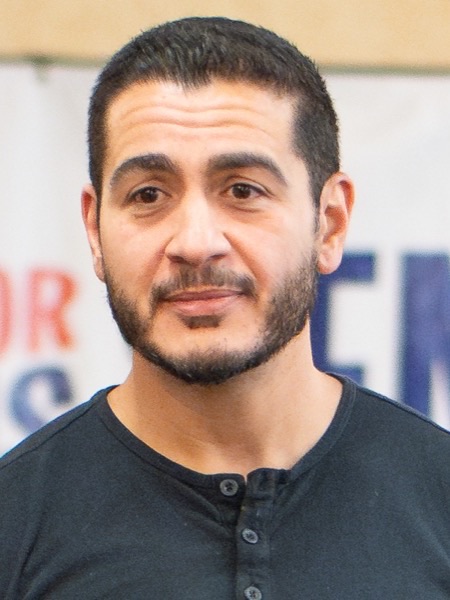


Abdul El-Sayed (D)
El-Sayed is an epidemiologist. He read medicine at Columbia, took a doctorate at Oxford as a Rhodes Scholar, and ran Wayne County’s health department until he resigned to run for this seat. His parents emigrated from Egypt; he grew up in metro Detroit.
He has lost before. In 2018 he ran for governor and lost the Democratic primary to Gretchen Whitmer. This August he won the Senate primary against Congresswoman Haley Stevens by about a point, and became the first Muslim nominated for the Senate by a major party.
That primary turned on a specific place. Record turnout among Arab American voters in Dearborn and Dearborn Heights gave him roughly 16,000 votes more than his opponent there — in a race he carried statewide by about 15,700. The margin and the community were effectively the same number.
He runs on Medicare for All, ending US military funding to Israel, and abolishing ICE, and argues that money spent on conflicts abroad — the war with Iran included — belongs in healthcare and housing at home. It is a more specific platform than most, which gives both his supporters and his opponents more to work with.
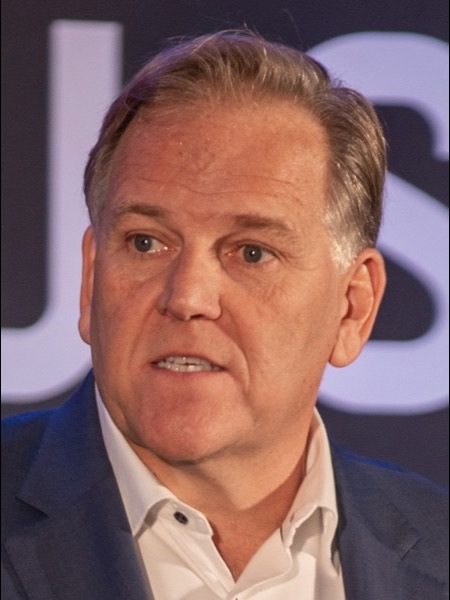
Mike Rogers (R)
Rogers served in the Army and then as an FBI special agent before seven terms in Congress, the last two chairing the House Intelligence Committee. In that role his committee investigated the Benghazi attack and found no intelligence failure and no stand-down order — a conclusion that contradicted what his own side was saying at the time.
He left Congress in 2015, spent eight years in cybersecurity, and came back in 2024 to run for Michigan’s other Senate seat. He lost to Slotkin by 0.3 per cent, in a year his party carried the state at the top of the ticket. This is his second consecutive run.
Two things are held against him. His record on government surveillance was attacked from inside his own party during the 2024 primary. And more recently he has repeated the president’s claims about the 2020 election, and questioned the result of his own narrow defeat in 2024.
The environment
Michigan is having a hard autumn, and unlike Texas there is no offsetting boom.
Fuel. Petrol averages **3.03 a year ago. It peaked at 6 nationally, up about seventy per cent in a year, and Michigan has seen some of the sharpest increases in the country.
Work. Unemployment sits at 5.0 per cent and has not moved in over a year. Employers announced 1,677 layoffs in the second quarter, with the electric-vehicle slowdown, fuel costs and consolidation all named; the largest single filing covers 1,140 workers at Factory Zero in Detroit.
The war. US forces have been striking Iran since 1 September, and Ayatollah Khamenei was killed in the course of it. Fighting in the Strait of Hormuz, which carries over a fifth of the world’s oil, is most of why fuel costs what it does. It is also not an abstraction in a state with the country’s largest Arab American population: asked about Khamenei’s death, El-Sayed declined to comment on it, saying there were people in Dearborn who were sad, and was pressed at a university town hall by an Iranian American whose family had been persecuted by Tehran.
The president. Trump’s approval in Michigan is 40 per cent against 55. Nationally it has fallen to around a third, the lowest of his career, with the cost of living and the war named most often by those who have soured on him.
An oil state would feel some of this as a boom. Michigan pays the fuel bill and takes the auto-sector hit.
What everyone else says
Collected in a table at the end, alongside ours. The short version: every public instrument has El-Sayed ahead, and none of them by much. Five polls since mid-September put him between one and five points up; the polling averages sit near three; Polymarket has him at 71.5 per cent to win and a margin of +3.6, and has drifted toward him over the past month.
The disagreement is not about who is ahead. It is about whether the lead is inside the margin of error or just outside it.
What we got
We synthesised 200 synthetic Michiganders, matched to the state on age, sex, education and ethnicity, gave them the October conditions above, and asked how they intend to vote.
El-Sayed +4.4
Two-party — undecideds, minor candidates and non-voters set aside, and the remaining shares renormalised, exactly as with the poll margins.
That is inside the published range (+1.0 to +4.8), two points above the poll average, and eight tenths above Polymarket. Our population also implies a 77 per cent chance he wins, against Polymarket’s 71.5 and Kalshi’s 74.
Then the part that matters more.
Where we are wrong
Mitchell Research published full crosstabs, so we can check our population against theirs cell by cell rather than taking the topline on trust.
| Group | n | Published poll | Our synthetic Michigan | Difference |
|---|---|---|---|---|
| No four-year degree | 138 | Rogers 3.2 | Rogers 1.1 | 2.1 |
| College graduates | 62 | El-Sayed 11.6 | El-Sayed 16.1 | 4.5 |
| White voters | 147 | Rogers 5.6 | Rogers 1.1 | 4.5 |
| Men | 98 | Rogers 12.1 | Rogers 4.8 | 7.3 |
| Women | 102 | El-Sayed 20.5 | El-Sayed 13.4 | 7.1 |
| Black voters | 25 | El-Sayed 77.5 | El-Sayed 20.3 | 57.2 |
Five of those six are within eight points. The sixth is not close to close.
Mitchell has Black Michiganders breaking for El-Sayed 71 to 9. Our synthetic Black Michiganders break for him 46 to 31. We have the right winner and we have lost roughly three quarters of the margin.
This is not new and it is not local. Simulated Black electorates have come back far too Republican in every study we have run, across states with very different Black populations. It is the largest known defect in this method, we do not yet understand it, and it survived a round of fixes this week that moved almost everything else.
Our sample holds 25 Black voters, so the cell is noisy — but not 57 points of noisy.
The topline is right. It is right partly because a 57-point error in a group that is an eighth of the sample is being cancelled by smaller errors pointing the other way in groups that are larger. A number can be correct and not yet trustworthy, and that is a fair description of this one.
How to grade us
Michigan votes on 3 November 2026. Three things to check, in the order they should count:
- Did we call the winner? We say El-Sayed, narrowly. So does every public poll and both prediction markets.
- Was the margin close? We published El-Sayed +4.4. A result more than a few points either side is a miss regardless of who won.
- Did the internals hold? This is the one we care about. If El-Sayed wins and we were still 57 points out among Black voters, we have learned nothing from being right.
Everyone’s number, side by side
All margins two-party, D-positive. Positive means El-Sayed.
| Source | Date | Finding | Two-party margin |
|---|---|---|---|
| YouGov | 22 Sept–4 Oct, n=3,947 | El-Sayed 49, Rogers 48 | D+1.0 |
| Quantus Insights | 5–6 Oct, n=744 | El-Sayed 48, Rogers 47 | D+1.1 |
| Emerson College / Nexstar | 12–14 Sept, n=1,000 LV, ±3 | El-Sayed 48, Rogers 46 | D+2.1 |
| Trafalgar Group | 1 Oct | El-Sayed 47, Rogers 45 | D+2.2 |
| Polymarket | 8 Oct, live | El-Sayed 71.5% to win | D+3.6 |
| Synthetic Users | 8 Oct, n=200 synthetic | El-Sayed ahead once undecideds are set aside | D+4.4 |
| Mitchell Research / CBS Detroit | 1 Oct, n=682 LV, ±3.8 | El-Sayed 45.6, Rogers 41.4 | D+4.8 |
Six instruments, all agreeing on the winner, spread across about four points. We are at the top of that spread, with the widest error bars of any poll on the chart — two hundred synthetic voters buy a standard deviation of six points against YouGov’s 1.6. Being in the right place with loose error bars is the honest description of where this method is.
Every voter in this study is synthetic. The figures describe a simulated Michigan electorate, not a poll of real people, and are published as a testable estimate rather than a forecast.
Sources
Polling and markets
- Emerson College Polling, Michigan 2026: El-Sayed and Rogers locked in a close election — 12–14 Sept 2026, n=1,000 likely voters, ±3. Source of the education crosstab and the Michigan Trump-approval figure.
- WWMT, Mitchell poll shows El-Sayed leading Rogers — Mitchell Research for CBS News Detroit, 1 Oct 2026, n=682, ±3.8. Source of the race, sex and party crosstabs.
- Newsweek, Rogers seizes on October 7 anniversary — YouGov and Quantus Insights toplines.
- PoliAgg, Michigan Senate 2026 polling — Trafalgar and the polling average.
- Polymarket, Michigan Senate Election Winner and Margin of Victory — prices read 8 Oct 2026.
The candidates
- Abdul El-Sayed and Mike Rogers — biographies and electoral history.
- Bridge Michigan, What did Mike Rogers do in the House?
- PBS NewsHour, How El-Sayed rose from political oblivion to a progressive breakthrough
- PBS NewsHour, Slotkin wins Michigan’s open Senate seat, defeating Rogers — the 2024 result.
- Arab American News, Dearborn-area voters proved decisive in El-Sayed’s primary victory
- Newsweek, El-Sayed pressed at town hall over response to the Iranian leader’s death
The environment
- AAA Michigan via ClickOnDetroit and AAA newsroom — petrol prices and the September peak.
- MITechNews, Michigan announces 1,677 layoffs as EV slump and fuel prices take a toll
- Michigan Department of Labor, employment situation
- Wikipedia, September 2026 United States strikes on Iran
- Al Jazeera, oil prices surge as US–Iran strikes intensify in the Strait of Hormuz
- Al Jazeera, Trump approval hits a career low of 32% amid the Iran war and high costs
- Wikipedia, 2026 United States Senate election in Michigan